Frequently asked questions
Frequently asked questions
A few answers to questions we hear often. Click a question to see the answer.
Joints and osteoarthritis
What is osteoarthritis and what can I do about it?
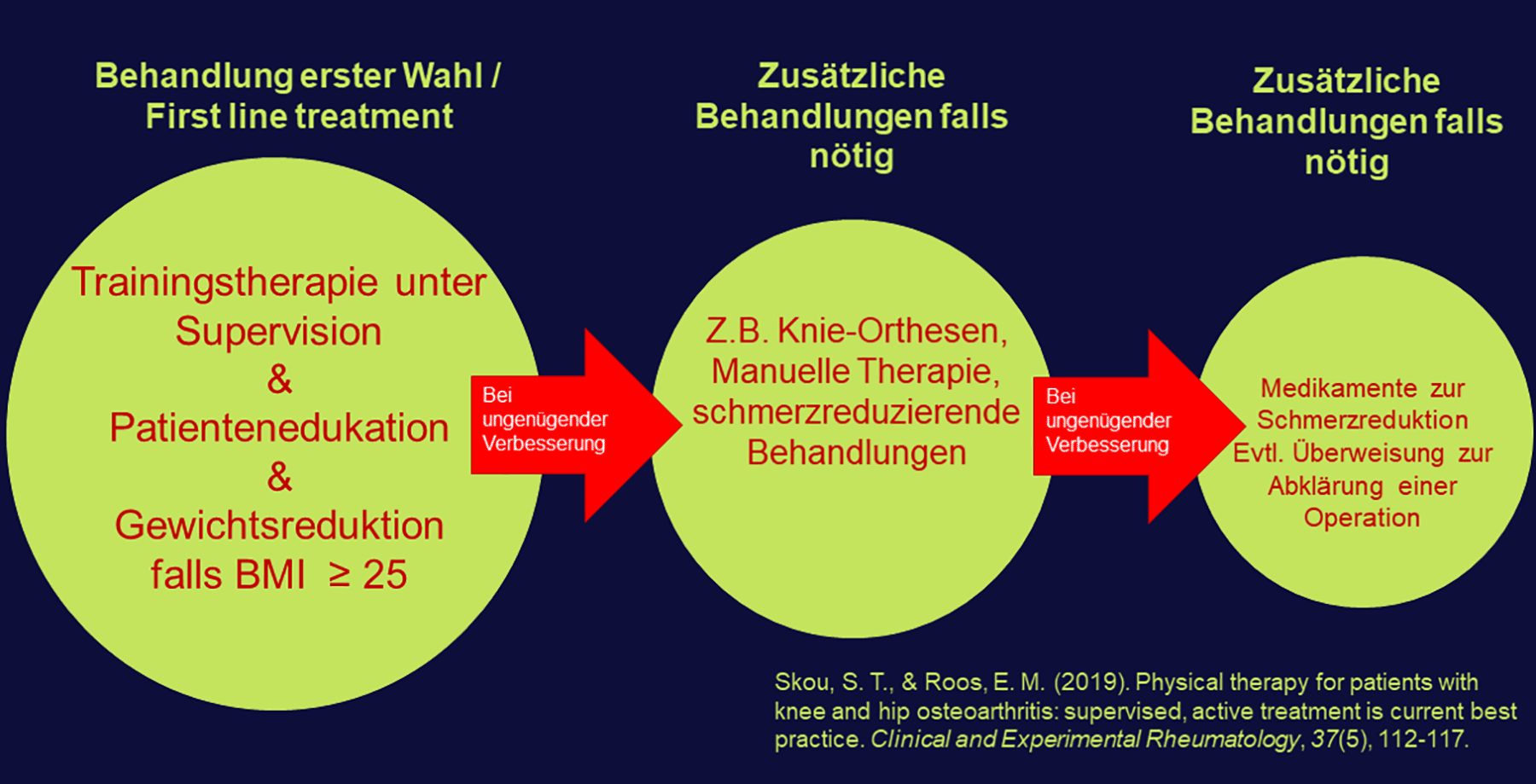
Osteoarthritis affects not just the cartilage but the whole joint. International experts – doctors and physiotherapists alike – recommend a combination of education, exercise therapy and, if the BMI is ≥ 25, weight reduction as the basic treatment for everyone.
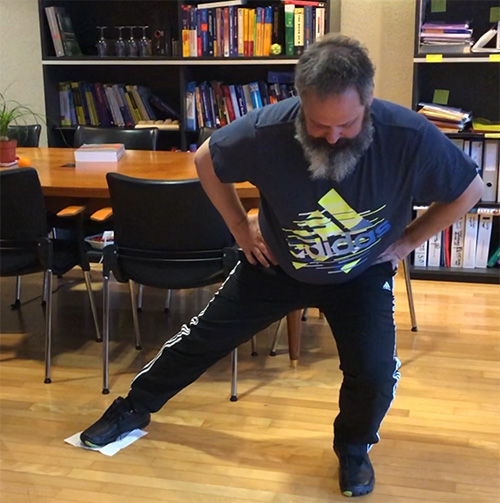
And you can train almost anywhere – even at the office 😉
More information:
- Swiss League against Rheumatism: osteoarthritis (German)
- Guidelines: NICE · OARSI · EULAR
We offer the internationally tested programme GLA:D – living well with osteoarthritis. Learn more.
More on this: Understanding osteoarthritis
Meniscus lesions without an acute injury?
A meniscus can tear not only in an accident – it can also degenerate gradually. For such degenerative meniscus problems, active therapy is often worthwhile before considering surgery.
I have osteoarthritis and I'm weather-sensitive. What does the science say?
There are indications that weather-related factors can change symptoms – temperature swings, humidity and air pressure are mentioned in studies. The findings are, however, not consistent.
Some of the research:
Can I still jog with osteoarthritis – does running ruin your knees?
Running does not ruin your knees. In studies, recreational runners in fact had hip and knee osteoarthritis less often than physically inactive people.
Pain during exercise is not automatically a sign of damage either: mild to moderate discomfort that settles again within 24 hours is as a rule harmless.
What matters is how you build up – increase the load step by step rather than picking up where you left off after a long break.
More on this: Understanding osteoarthritis – sport and running
My hip pain sits on the side – is that hip osteoarthritis?
Probably not. In hip osteoarthritis the pain usually sits in the groin, not on the side of the pelvis, and it often runs down into the knee.
Pain over the bony bump at the side of the hip is usually something else – most often an irritated gluteal tendon, which is treated differently.
This is not hair-splitting: the two problems need different exercises.
More on this: Hip osteoarthritis – where the pain sits
Can training postpone a hip replacement?
Possibly – but it is not proven. In the only trial that followed this up over years, those who trained received their artificial joint considerably later on average. It is a single, small trial: promising, not proven.
And if it does come to surgery, that is not a failure. An artificial hip joint is one of the most reliable operations in medicine; after 25 years it is still in place in around 58 of 100 people.
More on this: Hip osteoarthritis – can surgery be postponed?
Back, neck and muscle tension
Back pain – what is Cognitive Functional Therapy?
Cognitive Functional Therapy (CFT) is a modern, evidence-based approach for persistent pain in the movement system. The core idea: pain is complex and shaped not only by physical factors but also by thoughts and psychosocial factors.
At its heart is a very thorough assessment with good listening: how do you move? How do you interpret your pain, what beliefs and fears are there? The cognitive part helps you make sense of the pain; the functional part changes unhelpful movement and behaviour patterns.
CFT is not a miracle cure – it is used when simpler approaches haven’t helped.
There is a video glimpse on our Movement helps page (consent required, since it’s YouTube).
More on this: Understanding back pain
I have back pain – do I need an MRI?
In the vast majority of cases, no. More than 90 per cent of back pain is “non-specific”. That does not mean “there is nothing wrong”, but that no single structure can reliably be named as the source of the pain.
An imaging finding on its own does not explain your pain anyway. Disc bulges and degeneration are found in the majority of people without symptoms – in 84 and 96 per cent respectively of pain-free 80-year-olds.
Serious causes account for under one per cent. There are warning signs for those, and they belong in a doctor’s hands.
More on this: Understanding back pain – what images show
What helps against back pain that keeps coming back?
Recurring episodes are normal and not a sign of failure – most episodes improve markedly in the first few weeks.
For the time in between there is a surprisingly simple finding: a regular walking programme almost doubles the time to the next recurrence – 208 instead of 112 days in the largest trial on this to date.
Which form of exercise you choose matters less than sticking with it over months.
More on this: Understanding back pain – preventing recurrences
Does massage release tension – and flush something out?
Massage feels good, and that is well documented – but not in the way most people assume.
Nothing gets “flushed out”: massage does not increase blood flow in the muscle and does not clear lactate; in one measurement it actually slowed removal. You do become more mobile briefly, but through the nervous system – measured muscle stiffness does not change.
And as for muscle “knots”: hardened spots can be neither reliably felt nor objectively measured. Massage mainly eases the pain there.
More on this: Mechanisms of action of massage
Endurance and intensity
I want to be active for my health. How much should I do?
The World Health Organization (WHO) is clear on the amount:
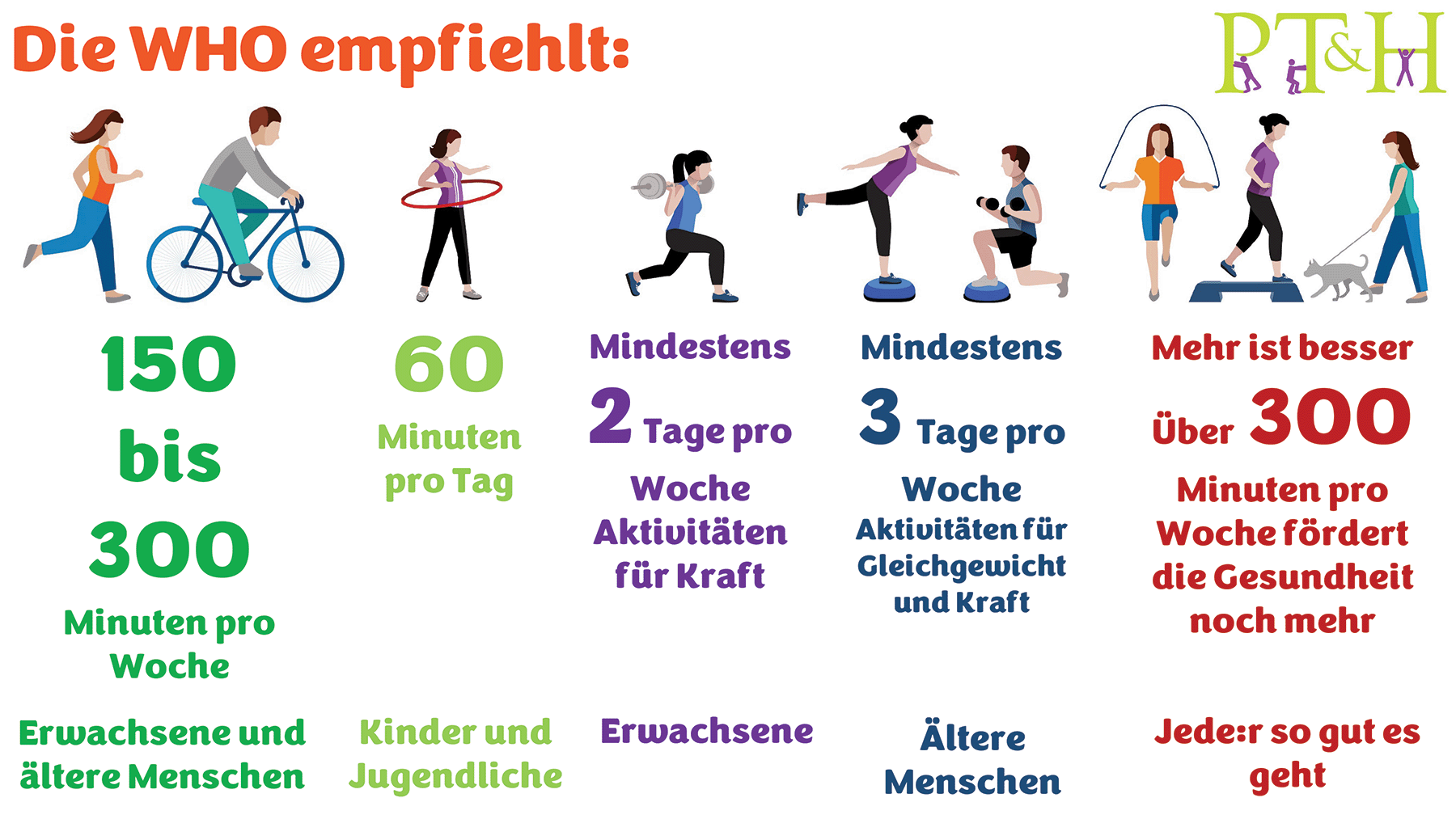
- 150–300 minutes per week at moderate intensity or 75–150 minutes at vigorous intensity.
- Plus strength training for all major muscle groups on at least two days.
- From age 65, add on at least three days a varied, multicomponent programme emphasising functional balance and strength (one programme containing both – not two separate obligations).
Rule of thumb: moderate = you can still speak full sentences and just about sing; vigorous = talking yes, singing no.
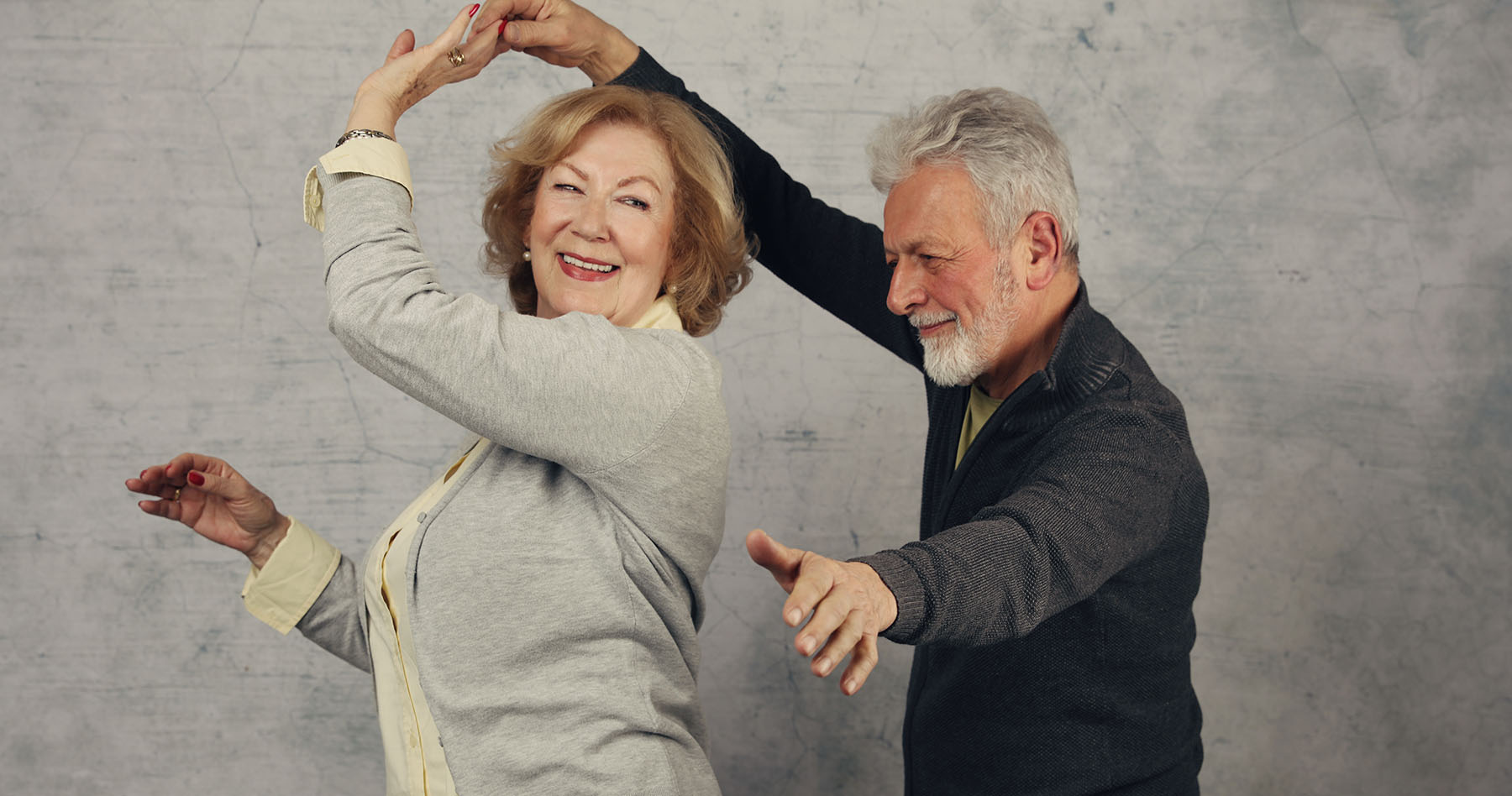
Most important: find an activity you enjoy – only regular movement helps. Dancing, for example, is excellent.
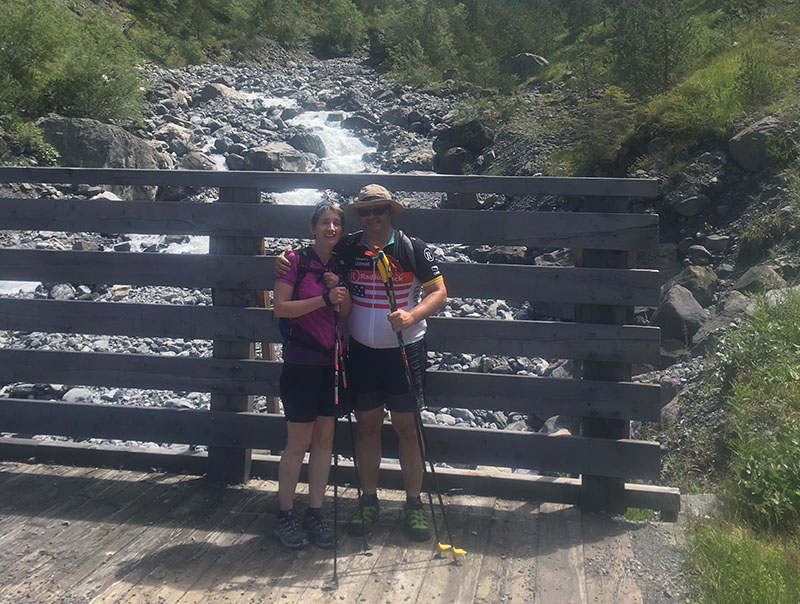
Roger prefers hilly terrain and controls the descent to protect the joints – often with poles (Nordic walking), which trains more muscles.
More on this: Understanding endurance training – how much do you need?
How hard should I train for it to be good for my health?
We distinguish endurance and strength training, because intensity is judged differently.
Endurance: intensity can be split into zones. In the 3-zone model two thresholds separate the ranges – the first and second ventilatory threshold (roughly first/second lactate threshold).
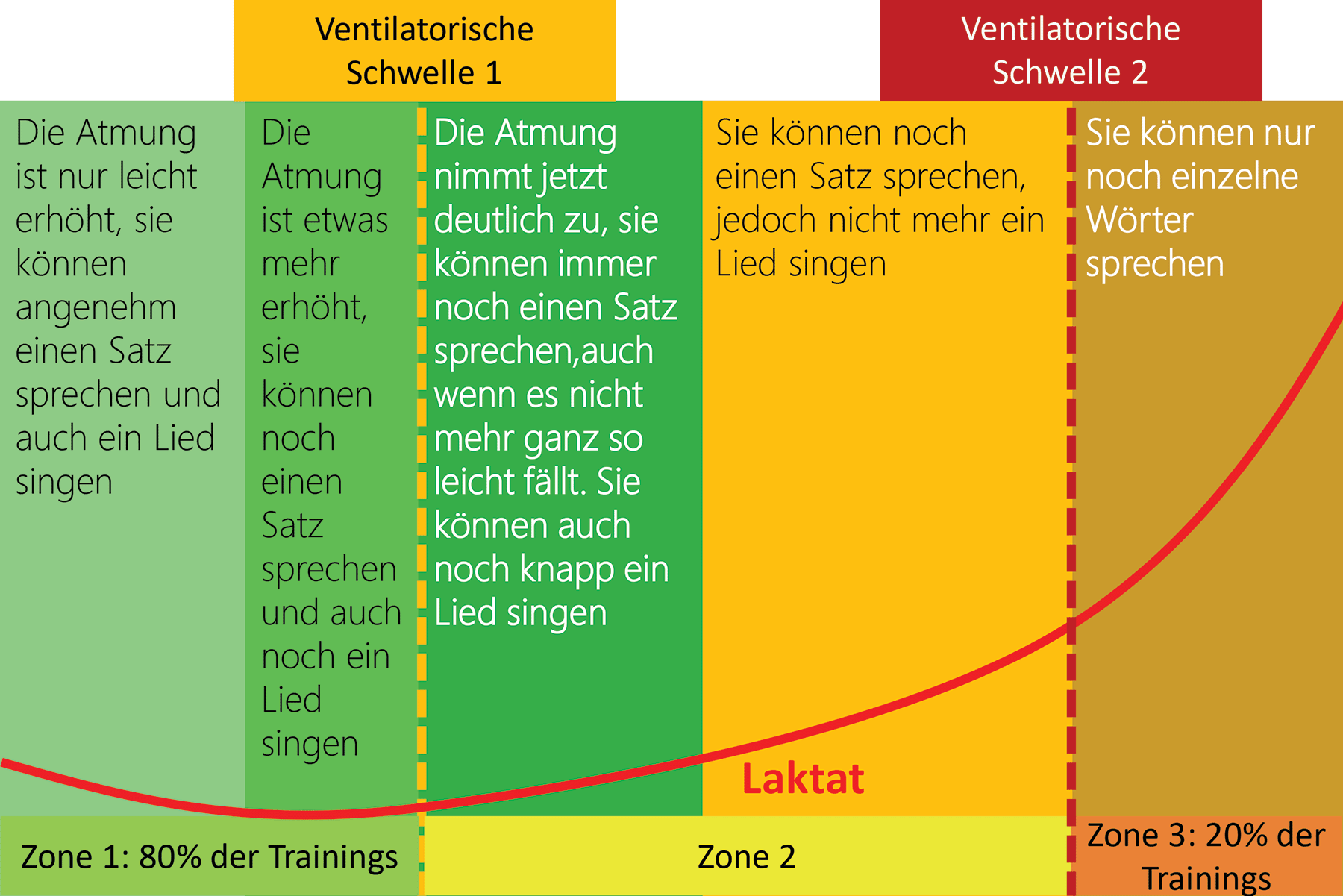
- First threshold: breathing quickens a little; talking is still easy, singing barely. Below it you can train for a very long time.
- Second threshold: full sentences get hard, lactate rises steeply. You can hold this from a few minutes up to about an hour, depending on fitness.
A common mistake is training too much between the thresholds. Better: many long sessions at the first threshold and a few hard ones at/above the second.
Percent-of-max-heart-rate figures are fine on average but often wrong for the individual. Ideally, determine at least the first lactate threshold – a simple, safe lactate step test is enough (a small drop of blood from the finger at each stage).
More on this: Understanding endurance training – the two thresholds
At what intensity do I burn the most fat?
The faster you train, the more energy you need – but your carbohydrate stores empty quickly and cravings kick in. Training more slowly burns fewer calories but a larger share of fat.
You burn the most fat around the first ventilatory threshold – this point is called FatMax.
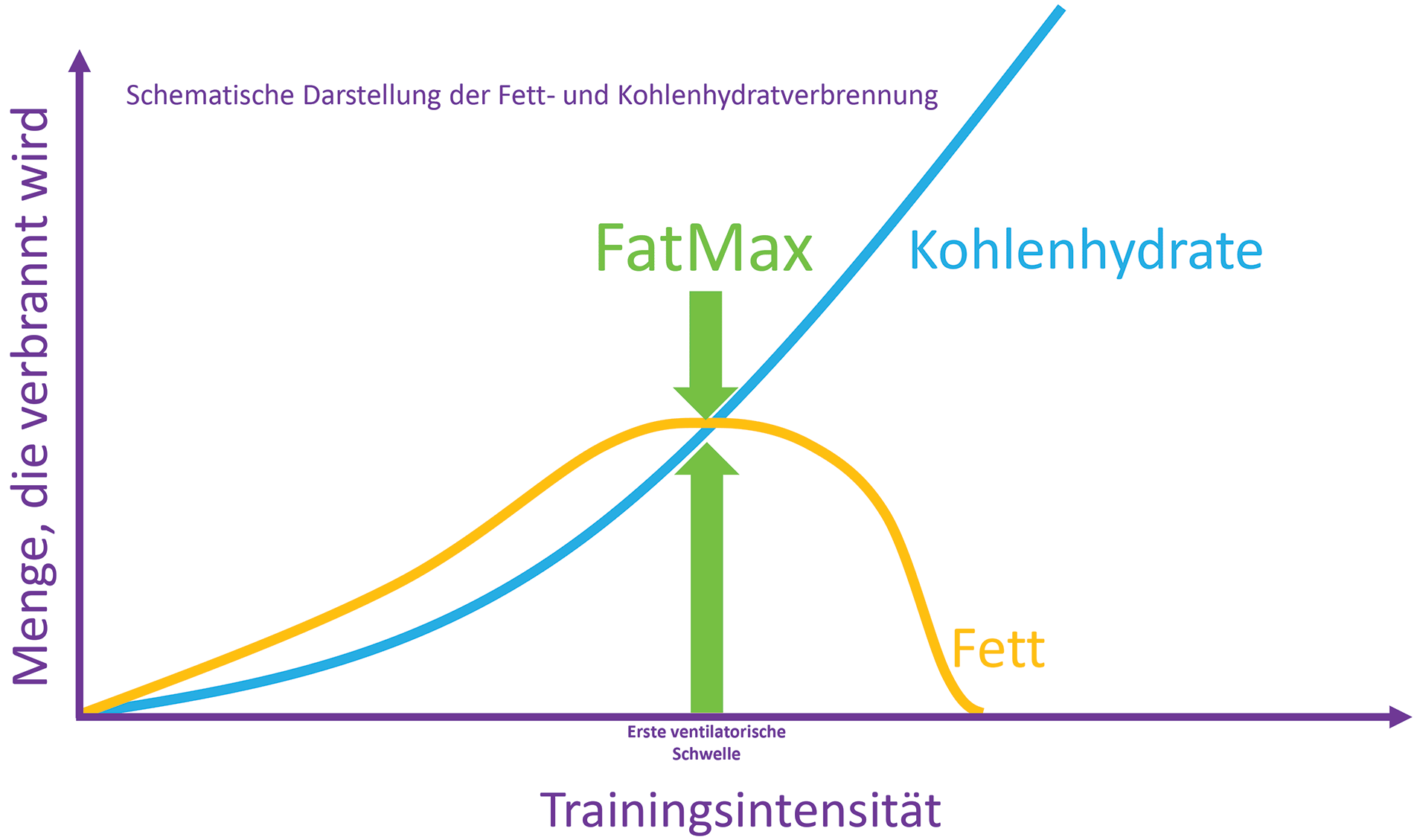
This intensity can be determined with a lactate step test (with us on the bike ergometer or on foot, CHF 180).
Simple self-test: on the ergometer, choose a power at which you can speak normally; increase by 20 watts every 4 minutes and read a text aloud during the last 30 seconds. You’ve reached the first threshold when you need to breathe more deeply after just a few words.
What happens in the body with inactivity and activity?
Physical inactivity contributes to risk factors such as excess weight, insulin resistance, unfavourable blood lipids, inflammation and oxidative stress – and thus to vascular and cardiovascular problems.
Exercise works the other way: it improves vascular and cardiac function, lowers blood pressure, improves blood lipids, reduces insulin resistance and inflammation, and boosts blood flow to the muscles.
I train regularly and still don't get fitter. Why?
One common reason is the middle. Most people train too hard for an easy day and too easy for a hard one – everything ends up in between. This range is not ineffective, but it costs recovery and tolerates only a limited dose. When almost every session lands there, progress often fails to appear.
The second reason is simply the amount. “I don’t respond to training” often means “the dose was too small”: in one study of 78 people, every apparent non-responder improved as soon as two sessions per week were added. More dose, more time or a different stimulus is therefore the first thing to try – and part of what looks like standstill is ordinary measurement variation.
More on this: Understanding endurance training – the grey zone
How do I know whether I'm training easily enough?
The best test costs nothing: can you still sing? Effortlessly, that is, not just barely. The widespread rule “talking yes, singing no” does not describe the middle of the easy zone but its upper limit.
Two further signals without a device:
- If your heart rate rises by more than ten per cent over a long session at constant pace, you were going too fast.
- If you are not hungry half an hour after an “easy” session, it was not easy.
More on this: Understanding endurance training – the singing test
Strength training and building muscle
Machines, free weights or body weight?
All three have pros and cons.
Machines are easy to dose and – set up correctly – safe; useful when, say, a squat isn’t (yet) possible. You also often train in a centre, which helps motivation.
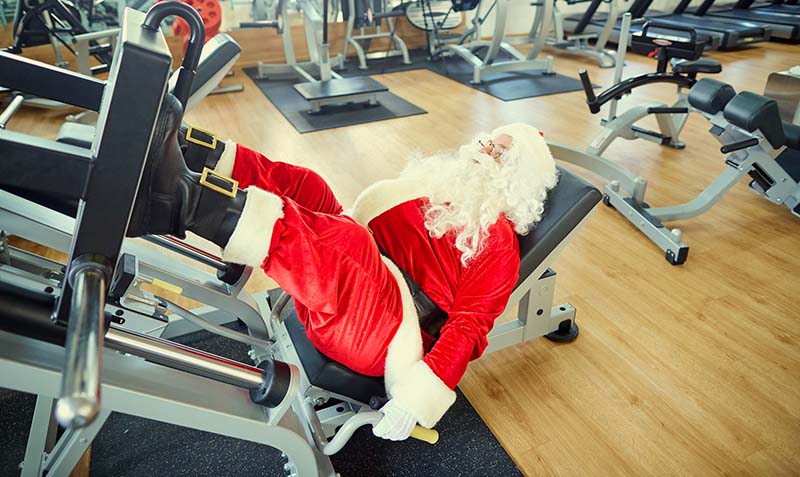
Free weights (e.g. dumbbells) challenge coordination more – an advantage, but they need more guidance.
Body weight is very safe and possible anywhere with little effort; adapting the exercises to your goal takes some know-how.
We’re a small practice without weight machines and convinced that equipment-free exercises benefit most people. If machine training becomes necessary, colleagues in Brig offer it.
More on this: Strength training – machines or free weights?
How often and how heavy do I have to train for it to work?
Only a few things really make a difference:
- train at least twice a week
- work all the large muscle groups
- make each set strenuous enough that only a few repetitions would still be possible at the end
- perform the movements fully
- after a few weeks, manage more weight or more repetitions than at the start
Lack of time is the weakest objection: four sets per muscle group per week with three to four basic exercises are enough as a minimum – that is two sessions of twenty to thirty minutes.
More on this: Strength training – the levers that count
Is strength training safe in later life or with a heart condition?
Yes. In studies with over 38,000 participants, strength training did not increase serious adverse events. Among people with narrowed coronary arteries, all 63 cardiovascular events occurred during endurance training – not a single one during strength training.
No age is too high and none too low: in people aged 60 and over with already reduced muscle strength, balance, walking speed and rising from a chair improved clearly within a year.
If you have a known cardiovascular condition, still discuss it with your doctor beforehand.
More on this: Strength training – is it safe?
Do I have to do 8 to 12 repetitions to build muscle?
No – the narrow window of 8 to 12 repetitions is out of date. The muscle grows equally well anywhere from about 5 to 30 repetitions. This does not hold for maximal strength; that still requires heavy loads.
But there is a condition without which none of this is true: the lighter the weight, the further you have to take the set. Pulling the yellow band twelve times when thirty would have been possible is a warm-up, not training.
More on this: Building muscle – the repetition range
Ageing, fall risk and independence
Fall risk in older people
The risk of falling increases with age – and it is higher when health problems reduce balance, vision, or strength, or cause dizziness. Various medications can also raise the risk; ask your doctor about it.
Useful resources:
- BFU – preventing falls (German)
- StoppSturz – fall prevention in old age (German)
- Short fall-risk check (questionnaire, as recommended by the CDC)
If an increased risk is found, the cause should be clarified – including balance and strength tests (simple, no equipment). The Swiss League against Rheumatism offers fall prevention.
More on this: Preventing falls
Am I at risk of falling?
Answer a few short questions to estimate your risk. Note: this is not a medical diagnosis – ask your doctor.
At the end you can print a short report or save it as a PDF and discuss the results with your doctor. Your answers stay on your own device.
More on this: Preventing falls – how high is your risk?
What is sarcopenia and what can I do about it?
Sarcopenia is the progressive loss of muscle strength, muscle mass and physical performance. Under the current European definition (EWGSOP2), low muscle strength is the key criterion; low muscle quantity or quality confirms the diagnosis, and physical performance (e.g. walking speed) indicates its severity. It can occur with age (primary), but can also result from illness, inactivity or malnutrition (secondary). Sarcopenia raises the risk of falls, frailty and loss of independence.
The good news: you can do a lot about it. The most effective approach is strength training with increasing resistance, supported by enough protein and general activity. Strength – and especially fast, powerful movement – can be built up well into old age.
We support you with this: see Strength in later life and Power training in later life.
More on this: Muscle weakness in older age
How do I know whether my muscle weakness needs treatment?
What counts for the assessment is strength above all – not how big a muscle looks.
Everyday signs are: getting up from a chair is hard, stairs become laborious, shopping bags feel too heavy, walking speed drops.
A short self-test (SARC-F) helps with a first assessment – but it is imprecise and does not replace an examination. If several of these sound familiar, it is worth having it looked at with a few simple strength and walking tests.
More on this: Muscle weakness in older age – assessing it yourself
Is walking enough to prevent falls?
No. Walking is healthy, but it challenges balance too little; for walking programmes on their own, the effect on falls is unclear.
The type of exercise is what counts: what works is balance training that genuinely takes you to your limit, combined with strength work. A programme should run at least three times a week, for at least twelve weeks, and get progressively harder.
More on this: Preventing falls – why walking is not enough
What does "frailty" mean – and can it be reversed?
Frailty means the reserves have become thin. No single organ is diseased; several systems have lost their buffer at the same time – that is why influenza knocks one person off course and not another.
And yes, it is not a one-way street: without any treatment, almost one in four people at the intermediate stage returns to full resilience within four years. Once frailty is established, only about 3 per cent manage that. The intermediate stage is therefore the real window.
More on this: Frailty – not a one-way street
After injury, surgery and hospital
How long does it take after a knee replacement until I manage again?
Plan for a year, not for six weeks. The biggest gains fall in the first three to six months; after that progress is slower, but it continues.
Worth knowing: surgery solves the pain problem, not the strength problem. Measured performance on stairs, when walking and when standing up barely improves on its own in the studies – that is exactly where physiotherapy comes in.
And kneeling stays difficult: after one year a good third manage it, after three years almost half.
More on this: Physiotherapy after knee replacement – a realistic timeline
When can I return to sport after a hamstring tear?
By criteria, not by calendar. The pain goes long before the muscle can take load again – that is exactly why this injury is notorious: in elite sport up to one in four is injured again within a year, usually at the same spot and within the first two months after returning.
The criteria: no tenderness on pressure, strength and range of motion at least 95 per cent of the healthy side, repeated pain-free runs near top speed – and no hesitation when accelerating.
More on this: When the back of the thigh tears – when are you ready?
Why am I weaker after a hospital stay than before?
Because several things come together. The acute illness itself triggers an inflammatory and stress response in which muscle protein breaks down faster and many people eat less. On top of that comes lying down: ten days of bed rest cost even healthy 67-year-olds almost a kilogram of leg muscle and about a sixth of their knee extensor strength – and in hospital, adults spend 87 to 100 per cent of their time sitting or lying.
About a third of older people leave hospital less independent than before, even when the illness itself was treated successfully.
Little movement goes with more functional loss: in an observational study, people who walked fewer than 900 steps a day in hospital – roughly ten minutes – lost everyday abilities considerably more often. That figure is not a target.
More on this: Leaving hospital weaker – why it happens
How much muscle do I lose in a week in bed, and how long does rebuilding take?
Healthy young men lost about 3 percent of thigh cross-section, 7 percent of leg strength and 1.4 kilograms of fat-free mass in seven days of strict bed rest. At 67, ten days in bed cost about one kilogram of leg muscle and 13 percent of knee extensor strength. Even without a bed: two weeks with 1,400 instead of 6,000 steps a day cost 72-year-olds 4 percent of their leg mass. In serious illness it goes faster, in intensive care 18 percent of thigh muscle in ten days. Even astronauts lost 13 percent of calf muscle in six months, despite training on board.
The way back takes many times as long. As a rule of thumb, about five days of training bring back what one day in bed cost. After two weeks of immobilisation, older men had regained their strength with four weeks of strength training, but muscle mass and power only partly. With everyday activity alone, 67-year-olds were still missing 8 percent of their strength one week after four days of immobilisation; young men had everything back.
More on this: Muscle lost in days, rebuilt in weeks
After a blow to the head – when do I need a doctor straight away?
These warning signs mean going to the emergency department straight away: severe or increasing headache, repeated vomiting, a seizure, double vision, increasing confusion, weakness or tingling in the arms or legs, severe neck pain after the accident.
A concussion is first and foremost a disturbance of function. You can have one without having been unconscious – and in the uncomplicated form CT and MRI are normally unremarkable. That is expected and does not contradict your symptoms.
More on this: Understanding concussion – the warning signs
Do I have to stay in a darkened room after a concussion?
No – strict rest in a darkened room is outdated. What is recommended is 24 to 48 hours of relative rest, then step by step more movement and more everyday life, even if mild symptoms are still there.
Early, measured activity actually shortens recovery: by about four and a half days on average in the summary of the evidence, which is predominantly of younger people after sport-related concussion.
The rule of thumb for the dose: your symptoms may rise by no more than two points on a ten-point scale during an activity, and should settle again within an hour.
More on this: Understanding concussion – movement is treatment
Neurological conditions
Can I exercise with MS, or does exertion harm me?
The old advice to “take it easy” has been refuted. Across 40 trials with 1780 participants, in which a draw decided who trained, those who trained had no more relapses and no more serious events than the comparison groups.
If you feel briefly worse after training, it is usually the heat: six to eight in ten people with MS react sensitively to a rise in body temperature. That is a temporary loss of function, not damage.
So: cool down beforehand, drink cold, train in the morning, in blocks rather than in one go.
More on this: Multiple sclerosis – the long-standing error
Which form of exercise helps most in Parkinson's?
Physiotherapy works – that is well established: a summary of 191 studies with around 8000 people shows improvements in movement signs, in balance, in walking and in quality of life.
Which kind of movement you choose, however, is surprisingly secondary: an analysis of 154 studies found hardly any differences between dance, gait training, endurance, strength, hydrotherapy and Tai Chi. What matters is that training happens at all – and that you stick with it.
One principle applies throughout: big rather than fast.
More on this: Parkinson’s – what physiotherapy achieves
What can you do when your feet suddenly stick to the floor?
When your feet block like this, more strength does not help – a trick does: shift your weight deliberately onto one leg, march on the spot, step over a foot or a joint in the floor, count or listen to a beat.
Pulling and pushing makes it worse – which matters especially for relatives who want to help.
Which cue works is individual. You try them out calmly and practise them where the freezing actually happens.
More on this: Parkinson’s – when the feet stick to the floor